Tooth Extraction; The Last Resort for Maintaining Oral Health
Tooth extraction is a specialized dental procedure performed in specific situations when other treatments, such as restoration or root canal therapy, are no longer effective. This procedure is carried out to prevent the spread of infection, protect the health of adjacent teeth, and improve the overall function of the mouth and jaw.
Tooth extraction (Exodontia) is the process in which a tooth is completely removed from its socket in the jawbone. Although modern dentistry prioritizes preserving natural teeth, sometimes extraction is the only way to maintain the overall health of the mouth.
Types of Tooth Extraction
Tooth extraction is divided into two main categories depending on the position of the tooth, the condition of the crown, and how the tooth is situated in the jaw. The choice of method is determined by the dentist after reviewing radiographic images (OPG or periapical X‑ray).
Here are the detailed explanations of both methods:
1. Simple Extraction
This method is used for teeth whose crowns are clearly visible in the mouth and can be easily grasped with dental instruments.
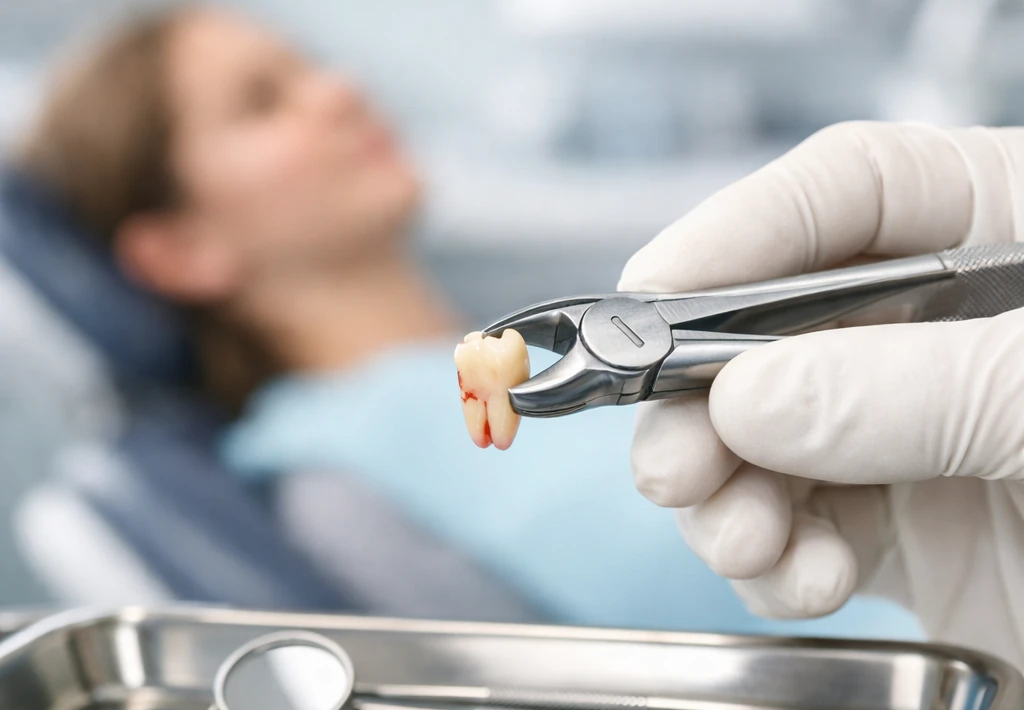
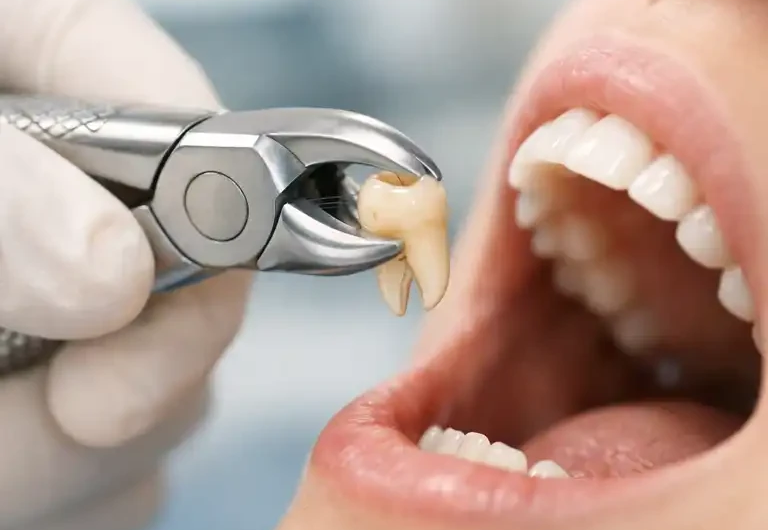
Procedure: The dentist first loosens the tooth using an instrument called an elevator, which helps detach the periodontal ligament fibers that connect the tooth to the bone. Then, using forceps, the dentist removes the tooth with controlled movements.
Type of anesthesia: Usually performed with local anesthesia (lidocaine).
Suitable for: Anterior teeth, teeth without severe destruction, and primary (baby) teeth.
2. Surgical Extraction
This method is used when the tooth cannot be accessed easily with simple instruments. Surgical extraction is more complex and requires greater precision.
Reasons for use:
The tooth is hidden under the gum (impacted tooth).
The tooth is broken at the gum line and there is no crown to grasp with forceps.
The roots are very curved or long.
Procedure: The dentist makes an incision in the gum (a flap) to expose the bone and the root. Sometimes a small amount of surrounding bone is removed, and the tooth may be divided into several sections (sectioning) to facilitate removal. Finally, the surgical site is sutured.
Type of anesthesia: Strong local anesthesia, and in more complex cases or when the patient has significant anxiety, sedation may also be used.
3. Special Case: Wisdom Tooth Extraction
Wisdom teeth have unique considerations due to their position at the back of the jaw:
Erupted wisdom tooth: Usually removed with a simple extraction.
Partially impacted wisdom tooth: Part of the tooth remains under the gum and requires minor surgery.
Fully impacted wisdom tooth (horizontal or vertical): Requires full surgical access through bone and gum because it may exert pressure on adjacent teeth.
Technical Note: Atraumatic Extraction
In modern dentistry—especially if dental implant placement is planned—the dentist may perform an atraumatic extraction. In this technique, the tooth is removed with minimal damage to the surrounding bone (socket) so that the site remains suitable for future implant placement.
Main Reasons for Tooth Extraction
Although the primary goal of dentistry is to preserve natural teeth, sometimes keeping a tooth in the mouth can endanger the health of the entire body or the neighboring teeth.
Here are the main scientific reasons that may require a dentist to remove a tooth:
1. Severe Tooth Decay
The most common reason for tooth extraction is decay that has progressed to the point where no healthy tooth structure remains for restoration.
When is extraction necessary? When the infection has reached the root and the tooth structure has become so weak that it cannot be saved with root canal treatment or a dental crown.
2. Advanced Periodontal Disease
Gum disease does not only affect the soft tissue; it also damages the bone that supports the teeth.
Reason for extraction: Gum infection can destroy the jawbone. When a tooth loses its supporting bone, it becomes loose, and extraction may be necessary to prevent the infection from spreading to other teeth.
3. Impacted Teeth
This situation most commonly occurs with wisdom teeth.
What is the problem? Due to lack of space in the jaw, the tooth cannot properly erupt through the gum. Impacted teeth may cause pressure on neighboring tooth roots, cyst formation, or chronic jaw pain.
4. Non‑Restorable Fractures
Sometimes teeth fracture due to trauma (accidents, sports injuries) or biting hard objects.
Critical point: If the fracture is vertical and extends deep into the root and below the gum line, the tooth can no longer be preserved and must be removed.
5. Orthodontic Reasons (Overcrowding)
Orthodontic treatment often requires space to properly align the teeth.
Reason for extraction: When the jaw is small or the teeth are too large or crowded, the dentist may remove one or two teeth (usually premolars) to create enough space for proper alignment.
6. Infection and Risk to the Immune System
Dental abscess: If a tooth infection cannot be controlled with antibiotics or root canal treatment, the tooth may need to be extracted to prevent the infection from spreading into the bloodstream—especially in patients with heart conditions or those undergoing chemotherapy
Care Topic | Key and Critical Actions | Additional Explanation and Reason |
Bleeding Control | Apply pressure on sterile gauze (1 hour) | Strictly avoid spitting saliva or blood. Suction can dislodge the blood clot. |
Pain Management | Take pain medication before the numbness wears off | Use anti‑inflammatory medications such as Gelofen or Novafen. If pain is not relieved with medication, contact the clinic. |
Swelling Control | Ice compress (first 24 hours) | Apply for 20 minutes, remove for 20 minutes. From the second day, use warm compresses to improve blood circulation. |
Nutrition | Soft and completely cool foods | Avoid hot, spicy, and hard foods (such as crispy rice or nuts). Chew on the opposite side of the mouth. |
Golden Restriction | Do not use a straw | The suction caused by a straw is the number one enemy of the blood clot and can lead to the complication known as “dry socket.” |
Oral Hygiene | Rinse with salt water (starting from the second day) | Do not rinse your mouth on the first day. From the second day, begin very gentle rinsing with warm diluted salt water. |
Rest | Avoid heavy physical activity (48 hours) | Increased heart rate and frequent bending can restart bleeding and increase swelling. |
Smoking and Alcohol | Prohibited for at least 72 hours | Smoking reduces blood oxygen and significantly interferes with wound healing while increasing the risk of infection. |
Medication Use | Complete the full course of antibiotics | Even if pain stops, continue antibiotics until the course is finished to prevent bacterial resistance. |
Final Note: If you have non‑absorbable sutures, you will usually need to return to the clinic after 7 to 10 days for their removal. If you experience high fever or bleeding that does not stop with gauze pressure, be sure to contact Dr. Hesam Nazari’s clinic.
We are here to help you make the best decision. To receive a free professional consultation and book an appointment with Dr. Hesam Nazari, please use the following methods:
Contact the Clinic (Landline): ☎️ +987153341322
Mobile & Urgent Consultation: 📱 +989031408680
Online Request: Fill out the form below, and our experts will contact you as soon as possible. 📩
Our commitment is to provide safe and painless services for your healthy smile. 🌿

Table of Contents
“All dental services, from general to cosmetic and specialized, are provided at this clinic. Below you can see some of the services.”
Teeth bleaching
(Teeth whitening)
Overdenture
(Implant-supported prosthesis)
Dentures
(Replacement tooth)
Dental restoration
(Dental reconstruction)
Pediatric dentistry
(Pediatric dentistry)
Cosmetic dentistry
(Cosmetic dentistry)
General dentistry
(General dentistry)
Dental scaling
(Dental cleaning)
These are some of our main services.
To view the full list of services and details of each treatment, visit the Services page
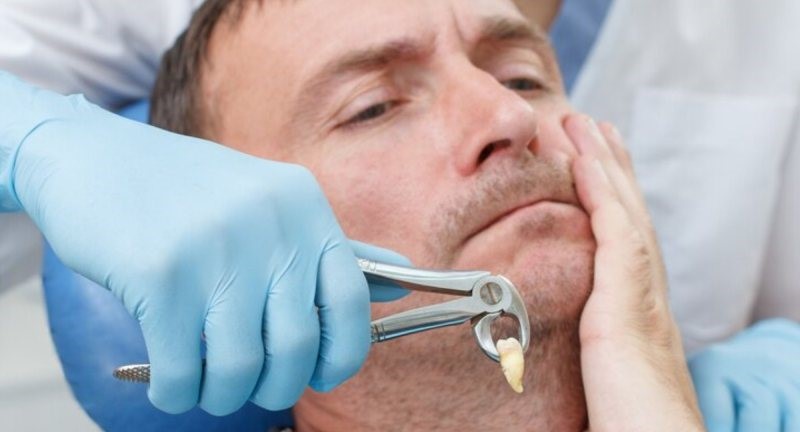
Step‑by‑Step Process of Tooth Extraction
The tooth extraction process—whether a simple extraction or a complex surgical procedure—follows a standard scientific protocol to ensure the patient experiences minimal stress and maximum safety.
Below are the stages from the moment you enter the treatment room until the procedure is completed:
1. Initial Evaluation and Imaging (X‑Ray)
Before any procedure, the dentist must see the “root map” of the tooth.
Radiography: Taking a periapical (PA) X‑ray or panoramic image (OPG) to determine the root length, curvature, and the distance from the jaw nerves or sinuses.
Medical history review: Asking about medications (especially blood thinners such as aspirin) and underlying health conditions.
2. Local Anesthesia
To ensure you feel no pain, the nerves around the tooth are temporarily blocked.
Numbing spray or gel: The gum is first numbed with a cotton applicator soaked in anesthetic so that the needle insertion is barely felt.
Injection: The anesthetic (usually lidocaine) is injected around the tooth. After about 5–10 minutes, the lip and gum become completely numb.
3. Tooth Loosening and Tissue Separation (Luxation)
The dentist does not immediately pull the tooth; the attachments must first be loosened.
Gum separation: A delicate instrument gently separates the gum from around the tooth.
Using an elevator: This tool works like a lever. The dentist places it between the tooth and bone and uses gentle rotational movements to loosen the tooth until the supporting periodontal ligament (PDL) fibers detach.
4. Surgical Step (Only If Necessary)
If the tooth is broken or impacted beneath the gum, an additional surgical step may be required.
Creating a flap: A small incision is made in the gum.
Bone removal or tooth sectioning: The tooth may be divided into two or three pieces to allow safe removal.
5. Tooth Removal (Extraction)
Once the tooth is sufficiently loose:
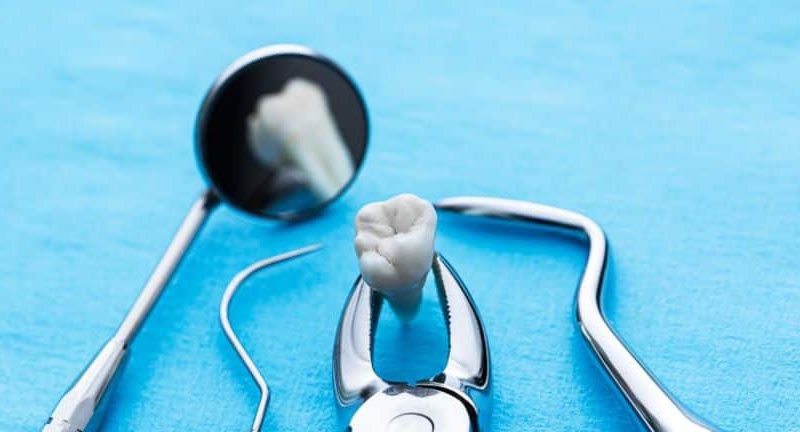
Forceps: The dentist grips the crown of the tooth with special forceps and uses controlled left‑right or rotational movements to remove the tooth from its socket.
6. Socket Cleaning (Debridement)
After the tooth is removed, the area must be thoroughly cleaned.
Gentle curettage: The dentist checks the socket to ensure no root fragments, cysts, or infected tissue remain.
Irrigation: The area is rinsed with sterile saline solution.
7. Bleeding Control and Clot Formation
This is the most important stage for the beginning of healing.
Dressing: A folded sterile gauze is placed over the extraction site.
Direct pressure: You will be asked to bite down on the gauze for about 45–60 minutes to stop bleeding and allow a blood clot to form.
8. Suturing (Optional)
If surgery was performed or the socket is large (such as with wisdom teeth), the dentist may place one or two sutures to bring the gum edges together and help control bleeding more quickly.
Essential Care After Tooth Extraction (First 24 Hours)
The first 24 hours after a tooth extraction are the “golden period” for preventing bleeding, severe pain, and infection. The main goal during this time is protecting the blood clot that forms in the tooth socket.
Below are the critical care instructions:
1. Managing the Gauze and Bleeding
Continuous pressure: Keep the sterile gauze placed by your dentist on the extraction site with gentle, steady pressure for at least 45–60 minutes.
Swallow saliva: Do not spit saliva or blood. The suction created by spitting can dislodge the blood clot and restart bleeding. Swallow all saliva and blood‑tinged fluid normally.
Changing the gauze: If significant bleeding continues after one hour, place a clean sterile gauze or a moist black tea bag on the site and bite down for 30 minutes. The tannins in tea help stop bleeding.
2. Physical Activity and Rest
Complete rest: Avoid heavy physical activity, exercise, or lifting heavy objects during the first 24 hours, as increased heart rate can restart bleeding.
Head position: When lying down or sleeping, use two pillows so your head remains elevated above your body. This helps reduce swelling and bleeding.
3. Diet (What Should You Eat?)
Only soft and cool foods: Options such as pudding, yogurt, ice cream, cold soup, and cooled mashed potatoes are ideal.
No straws: Do not use a straw for drinking. Suction can immediately destroy the blood clot and cause the painful complication known as dry socket.
Avoid hot or spicy foods: Heat can dilate blood vessels and trigger bleeding.
4. Smoking and Alcohol (Very Important)
Do not smoke: Avoid smoking for at least 48 hours (preferably 72 hours). Chemicals in cigarette smoke disrupt healing, and the suction motion can dislodge the clot.
Alcohol: Do not consume alcohol for 24 hours, especially if you are taking painkillers or antibiotics.
5. Controlling Swelling and Pain
Ice compress: To prevent swelling (especially after surgical extraction), apply a cold compress to the face. Place it for 20 minutes, then remove for 20 minutes. Only do this during the first 24 hours.
Medications: Take the prescribed pain reliever (such as Gelofen or Novafen) before the anesthesia completely wears off.
6. Oral Hygiene
Brushing: Do not brush around the extraction site during the first 24 hours. You may gently brush the other teeth, but avoid vigorous rinsing.
No mouthwash: Do not use mouthwash or saltwater rinses on the first day


💬 Free Initial Consultation & Examination 🩺
✨ For a free specialized consultation and to book an appointment with Dr. Hesam Nazari, please contact us through the following methods:
📱 Mobile Consultation: +989031408680
☎️ Clinic Phone: +987153341322
📍 Address: Iran, Fars, Fasa, Shahzadeh Ghasem Square, opposite Asieh High School, Dr. Hesam Nazari Clinic
🕐 Working Hours: Saturday to Wednesday (8:00 AM – 22:00)
Thursday, Friday & Public Holidays: Closed
📩 Please fill out the form below for online booking, and we will contact you as soon as possible.

Why Choose Dr. Hesam Nazari’s Clinic for Tooth Extraction
If you are looking for reasons to choose Dr. Hesam Nazari’s clinic for tooth extraction, the advantages of this center can be summarized in the following 5 points, all aligned with modern dental standards:
Expertise in Complex Surgical Cases
High proficiency in removing impacted wisdom teeth and fractured roots that require delicate surgical techniques, ensuring minimal damage to surrounding tissues.
Use of Modern Dental Technology
Utilization of advanced instruments and high‑quality anesthetic materials, allowing patients to experience a comfortable, virtually pain‑free procedure with minimal anxiety.
Atraumatic (Bone‑Preserving) Approach
A strong focus on atraumatic extraction techniques that protect the jawbone walls. This is especially important for patients who may plan to receive dental implants in the future.
Sterile and Safe Clinical Environment
Strict adherence to hygiene and sterilization protocols to prevent post‑surgical infections and ensure patient safety.
Post‑Treatment Support and Follow‑Up
Providing clear post‑operative care instructions and maintaining accessibility of the dental team to answer questions or manage urgent concerns during recovery
Conclusion: Although tooth extraction is considered the last resort in dentistry,
in many situations it becomes an unavoidable necessity to protect overall oral health and the surrounding teeth. A successful experience in this procedure depends mainly on two key factors:
1.The Right Choice
Having the procedure performed under the supervision of a specialist such as Dr. Hesam Nazari, who uses modern techniques and precise instruments to minimize damage to surrounding tissues.
2.Patient Responsibility
Carefully following post‑operative care instructions, especially during the first 72 hours, which plays a crucial role in preventing painful complications such as dry socket and in accelerating gum healing.
Do not forget that after a tooth extraction, the empty space should not remain untreated for a long time. Consulting a dentist about replacement options such as dental implants not only restores the beauty of your smile but also prevents jawbone loss and the shifting of neighboring teeth.
All dental services — from A to Z — are provided in this clinic. Below, you can see a selection of the main treatments.
Dental Bonding
(Dental Bonding)
Dental Bridge
(Dental Bridge)
Dental Onlay
(Dental Coating)
Dental Crown
(Protective Coating)
Impacted Wisdom Tooth Surgery
(Impacted Wisdom Tooth Surgery)
Wisdom Tooth Surgery
(Wisdom Tooth Surgery)
Oral and Maxillofacial Surgery
(Oral and Maxillofacial Surgery)
Root Canal Treatment (Endodontics)
(Root Canal Treatment)
You can see a selection of our clinic services here; for the full list, please visit the Services page.

“Let’s go to Instagram!”
“Join Dr. Hesam Nazari’s family on Instagram and follow us.”