Dental Crown (Dental Crown); A Beautiful and Strong Protector for Your Smile
A dental crown, or crown, is one of the most effective methods of tooth restoration that is used when a tooth is damaged, cracked, or weakened. This method not only helps restore the function of the tooth, but also ensures the beauty of your smile.
What is a dental crown?
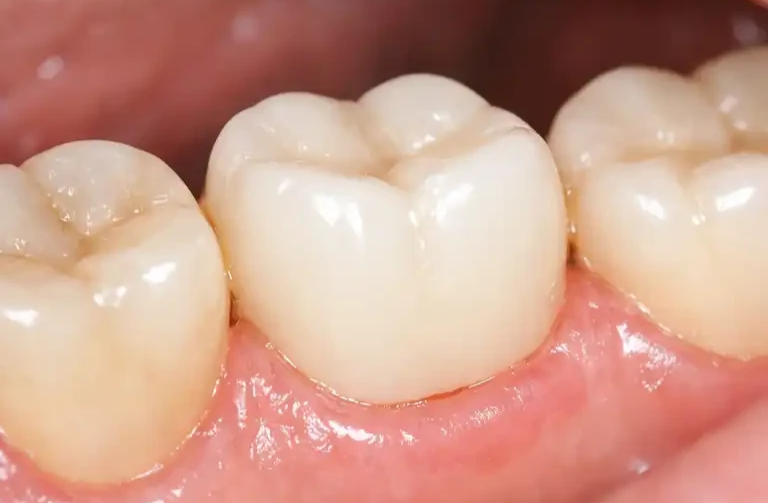
A dental crown is an artificial cap shaped like a tooth that is placed on the natural tooth and completely covers it from the outside. This crown is made with the purpose of protecting, strengthening, and beautifying the tooth. Many patients ask what a dental crown is. The crown is actually the bright and visible part of your tooth that is responsible for chewing. When this part is lost due to trauma or decay, we use specialized surgeries and modern crowns to rebuild your dental crown so that your smile remains both beautiful and strong.
The dental crown (Dental Crown) is actually the outer and visible part of the tooth that is located above the gum. When we talk about a “crown”, usually two concepts are meant: the natural crown of your own tooth and the artificial crown (cap) that the dentist places on the tooth for restoration.
Below I have provided precise explanations about both:
1.Anatomy of the natural tooth crown
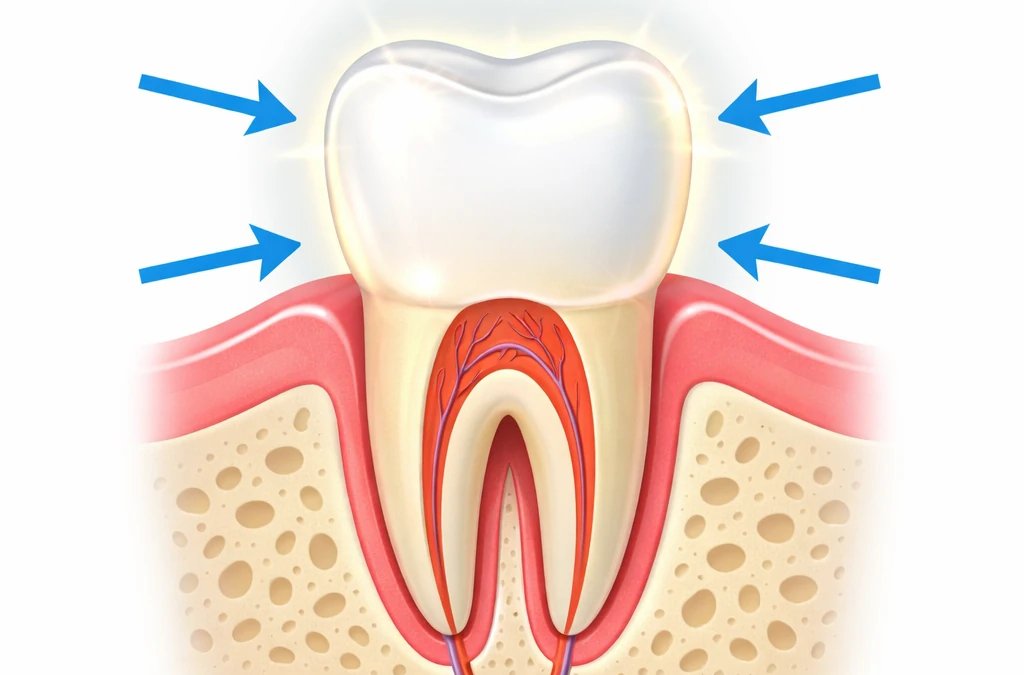
The natural crown of the tooth consists of different layers, each of which has a specific function:
Enamel (Enamel): It is the hardest tissue in the human body that covers the outer layer of the crown and protects the tooth against chewing pressure and acids.
Dentin (Dentin): The layer under the enamel that forms the main bulk of the tooth. Dentin is more sensitive than enamel and contains microscopic tubules that connect to the nerve.
Pulp (Pulp): The center of the tooth that contains nerves and blood vessels. It is responsible for nourishing the tooth and sensing heat and cold.
2.What is an artificial crown (tooth crown)?
When the natural crown becomes weak due to extensive decay, fracture, or after root canal treatment, the dentist uses a “cap” shaped like a tooth to place over the original tooth. In short, an artificial crown (cap) is a tooth-shaped cap that is placed over the damaged tooth to completely cover it.
Key points at a glance:
Main function: Protecting weak teeth (especially after root canal treatment) and preventing them from breaking.
Structure: It acts like a 360‑degree covering that replaces the lost enamel of the tooth.
Application: For teeth with extensive decay, broken teeth, or covering implants and aesthetic correction.
Material: Usually made of ceramic (for beauty), metal (for strength), or a combination of both.
Result: Return of chewing power and natural appearance to the tooth.
In short: A crown is for a tooth that has become so weak that it can no longer be treated with a simple
When is an artificial crown needed?
The need for an artificial crown (cap) arises when the natural structure of the tooth has been damaged to such an extent that its strength and function can no longer be restored with a simple filling (restoration with composite or amalgam).
Here we examine the most important reasons and key times for using an artificial crown:
1.After root canal treatment
This is the most common reason for using a crown. When a tooth undergoes root canal treatment, its blood supply is cut off and the tooth structure gradually becomes brittle and fragile over time. Also, usually a large part of the tooth has been drilled to access the canals. The crown acts like a protective cap and prevents the tooth from breaking under chewing pressure.
2.Presence of extensive decay
Sometimes decay is so extensive that more than 50 to 60 percent of the tooth structure has been destroyed. In this case, if the tooth is only filled, the remaining walls of the tooth cannot withstand pressure and the tooth may split into two halves. The crown surrounds the entire remaining structure and keeps it unified.
3.Tooth fracture or cracking
Teeth that have large fractures or suffer from “cracked tooth syndrome” create severe pain during chewing. An artificial crown distributes pressure evenly across the entire surface of the tooth and prevents the crack from opening and the fracture from progressing.
4.Severe tooth wear (Bruxism)
People who suffer from bruxism gradually lose their tooth enamel. This causes the teeth to become shorter, creates severe sensitivity, and disrupts the balance of the jaw. To restore the natural height of the teeth and protect the inner layers, crowns are used.
5.Aesthetic and corrective purposes
In cases where the tooth:
Has severe discoloration (that cannot be corrected with bleaching).
Is misshapen or does not match the other teeth.
Has abnormal gaps.
An artificial crown can create a uniform and beautiful smile.
6.Completion of replacement treatments
Implant: After the implant base is placed in the jaw, the final part that is placed on it and plays the role of the tooth is the artificial crown.
Bridge: To replace a missing tooth, the adjacent teeth must be crowned so that they can support the weight of the artificial tooth in the middle.
Type of Material | Composition | Aesthetic Level | Strength & Durability | Best Use Case |
Zirconia (Zirconia) | Zirconium oxide (a type of hard ceramic) | Very high | Extremely high | Posterior and anterior teeth (best modern choice) |
E-max (E-max) | Lithium disilicate (all ceramic) | Stunning (most natural) | Good (less than zirconia) | Front teeth (very transparent and beautiful) |
Metal-Ceramic (PFM) | Metal framework with porcelain coating | Medium | Very high | Molars and long bridges |
Full Metal (Gold/Alloy) | Gold, platinum, or chrome-cobalt | Very high | The highest possible durability | Back teeth with high chewing pressure |
Feldspathic Ceramic | Traditional porcelain | Very high | Low (brittle) | Veneers or special aesthetic crowns |
Resin Composite | Polymeric materials | Good | Low (prone to wear) | As a temporary crown |
Additional explanations for a smart choice:
Zirconia crown: Currently the “gold standard” in dentistry. Due to its high compatibility with the body, it does not cause sensitivity and, unlike older crowns, it does not darken the gum margins.
PFM crown: It has a more affordable price, but over time a black metallic line may appear at the gum margin. It is suitable for people who have a moderate budget and need high strength.
Gold crowns: Although they have gone out of fashion, they have the best compatibility with tooth tissue and never cause wear on the opposing teeth.
Difference between Zirconia and E‑max: If your priority is strength (for example, if you have bruxism), zirconia is the winner. If the priority is transparency and absolute similarity to a natural tooth, E‑max is unmatched.
We are here to help you make the best decision. To receive a free professional consultation and book an appointment with Dr. Hesam Nazari, please use the following methods:
Contact the Clinic (Landline): ☎️ +987153341322
Mobile & Urgent Consultation: 📱 +989031408680
Online Request: Fill out the form below, and our experts will contact you as soon as possible. 📩
Our commitment is to provide safe and painless services for your healthy smile. 🌿

Table of Contents
“All dental services, from general to cosmetic and specialized, are provided at this clinic. Below you can see some of the services.”
Teeth bleaching
(Teeth whitening)
Overdenture
(Implant-supported prosthesis)
Dentures
(Replacement tooth)
Dental restoration
(Dental reconstruction)
Pediatric dentistry
(Pediatric dentistry)
Cosmetic dentistry
(Cosmetic dentistry)
General dentistry
(General dentistry)
Dental scaling
(Dental cleaning)
These are some of our main services.
To view the full list of services and details of each treatment, visit the Services page


Stages of dental crown placement – Explanation
The placement of a dental crown is a precise process that is usually performed in two sessions (with an interval of 1 to 2 weeks). During this time, the dental laboratory has the opportunity to fabricate your custom crown.
Here we review the details of each stage:
1.First session: Preparation and impression
This session is longer and includes the following steps:
Anesthesia: To ensure that you feel no pain, the tooth and the surrounding gum tissue are numbed.
Tooth reduction (Preparation): The dentist trims a layer of enamel and dentin from all directions (top and all around). The amount of reduction depends on the type of crown; for example, full‑metal crowns require less reduction, while ceramic crowns require more reduction.
Impression (Impression):
Traditional method: Using special pastes that remain in the mouth for a few minutes.
Digital method: Scanning the tooth with special cameras (intraoral scanner) that creates a very precise three‑dimensional model.
Shade selection: The dentist uses a shade guide to choose the closest color matching your adjacent teeth.
Placement of a temporary crown: Because the tooth has been reduced and is sensitive, a temporary plastic (resin) crown is bonded to the tooth to protect it until the next session.
2.Intermediate stage: Fabrication in the laboratory
The impression or digital file is sent to the laboratory. Dental technicians fabricate the crown according to the selected material (zirconia, PFM, etc.), precisely matching the form of your jaw and opposing teeth so that no disturbance occurs during chewing.
3.Second session: Final cementation
This session is usually shorter:
Removal of the temporary crown: The temporary crown is removed and the tooth is cleaned.
Testing and adjustment: The dentist places the main crown on the tooth. At this stage the following are checked:
Complete fit: The crown must fit properly on the gum and tooth.
Bite (Bite): When you bring your teeth together, you should not feel height or extra pressure.
Color and form: If it is not aesthetically acceptable to you, it must be corrected before cementation.
Cementation (bonding): After confirming everything, a permanent and very strong adhesive (dental cement) is used and the crown is fixed in its place.
4.After placement (recovery period)
You may have slight sensitivity to cold and heat for a few days, which is normal.
If you feel the crown is high or puts pressure on other teeth, you must visit the dentist for readjustment.
New technology: Single‑visit crowns (CEREC)
In some clinics equipped with digital milling devices (CAD/CAM), all these steps are performed in a single 3‑hour session. The tooth is scanned, the device mills the crown on the spot, and the dentist installs it.
Care and longevity
The lifespan of a dental crown (cap) averages between 10 and 15 years, but with excellent care it can last 20 years or more. On the other hand, neglect can cause its failure in less than 5 years.
Below, we review the full details of care and factors affecting its longevity:
1.Factors affecting crown lifespan
Three main factors determine how long your crown will last:
Material of the crown: Gold and zirconia crowns have the highest resistance to fracture.
Health of the underlying tooth: If the tooth under the crown becomes decayed, the entire crown is lost.
Behavioral habits: Excessive pressure (bruxism) is the main enemy of crowns.
2.Hygienic care (vital)
Many people think that since the crown is artificial, it cannot decay; however, the tooth beneath and the surrounding gum are still vulnerable:
Flossing (very important): The junction between the crown and the tooth (gum margin) is a site for bacterial accumulation. If this margin is not cleaned with floss, the tooth under the crown will decay and the crown will loosen.
Brushing: At least twice a day using fluoride toothpaste.
Mouthwash: Use of alcohol‑free mouthwashes helps maintain the health of the gum around the crown.
3.Behavioral and dietary care
To prevent chipping or breaking of the crown (especially ceramic crowns):
Avoid very hard foods: Cracking nuts, pistachios, chewing ice, or very hard crusts (e.g., crispy rice) with the crowned tooth is prohibited.
Do not use as a tool: Never use the crowned tooth to untie knots, cut threads, or open bottle caps.
Bruxism control: If you grind your teeth at night, be sure to use a night guard (occlusal splint); otherwise, the crown will crack soon.
4.When to see your dentist
Even without pain, the crown must be checked annually by your dentist. However, if you notice any of the following, seek help immediately:
High bite: If, when closing your mouth, the crowned tooth hits the opposite one first (causing pain and possible fracture).
Bad breath: May indicate food impaction under the crown or decay of the underlying tooth.
Loosening: If you feel the crown moving, the cement may have washed away.
Gum inflammation: Redness or bleeding of the gum exactly at the crown margin.
Golden checklist for crown longevity
Brushing (twice daily): Prevents plaque formation around the gum. Clean the gum–crown margin gently but thoroughly.
Flossing (once every night): The most vital act for crowned teeth. Floss prevents decay of the natural tooth beneath the crown. If this tooth decays, the crown will lose all its support.
Dental check‑up (every 6–12 months): The dentist checks the condition of the cement and the tightness of crown margins to ensure there are no gaps or bacterial leakage.
Night guard use (every night – if needed): If you have bruxism, use of a night guard is essential. It prevents heavy pressure that may lead to cracking or breaking of the crown’s ceramic surface.


💬 Free Initial Consultation & Examination 🩺
✨ For a free specialized consultation and to book an appointment with Dr. Hesam Nazari, please contact us through the following methods:
📱 Mobile Consultation: +989031408680
☎️ Clinic Phone: +987153341322
📍 Address: Iran, Fars, Fasa, Shahzadeh Ghasem Square, opposite Asieh High School, Dr. Hesam Nazari Clinic
🕐 Working Hours: Saturday to Wednesday (8:00 AM – 22:00)
Thursday, Friday & Public Holidays: Closed
📩 Please fill out the form below for online booking, and we will contact you as soon as possible.

Why is our clinic your choice?
When it comes to oral health and smile aesthetics, trusting a specialized and compassionate team is the first and most important step. Our clinic, by combining cutting-edge science, extensive experience, and respect for the patient, is a worthy choice for you.
Features that differentiate us:
Real experience and expertise
Years of experience in specialized dental treatments combined with up-to-date knowledge will put your mind at ease about the outcome.
Friendly and transparent communication
We take the time to listen to your concerns; final decisions are made with full awareness and in a calm manner.
Precise and personalized treatments
Each patient is unique to us; treatments are planned according to the needs, facial structure, and specific conditions of each individual.
A calm, clean, and respectful environment
From the moment you enter until the end of treatment, a sense of calm, complete hygiene, and respect for you are our priorities.
State-of-the-art advanced equipment
By utilizing digital technologies, 3D scanners, and high-quality materials, we offer precise, fast, and lasting treatments.
Transparency in costs
Before starting any treatment, costs are explained in full transparency; with no hidden fees and no ambiguity.
Your choice is our honor!
We believe that dentistry is not just treatment, but a shared journey towards a beautiful and confident smile.
If you are looking for a reliable, humane, and professional experience, our clinic is the place you are looking for.
Our commitment to quality
By combining the art of smile design and the science of dental engineering, we restore your dental crown in a way that it is indistinguishable from your natural teeth in terms of appearance and function.
Conclusion :A dental crown is not only a covering to restore a smile, but also a strong fortress for the longevity of your natural roots.”
A dental crown (cap), beyond being a simple restoration, is considered a strategic solution for preserving oral and dental function and health in the long term. The correct selection of material (such as zirconia or e.max), taking into account the position of the tooth, along with the precise execution of the placement steps by the dentist, guarantees the restoration of chewing power and the beauty of the smile.
It should be remembered that the durability and lifespan of this artificial crown depend more on the patient’s commitment to maintenance and hygiene than on the dentist’s skill. By observing the golden triangle of “brushing, flossing, and periodic check-ups,” it is possible to prevent the destruction of the underlying teeth and enjoy a healthy and natural smile for many years.
Ultimately, a dental crown provides damaged teeth with a second opportunity to remain part of the living structure of the mouth, rather than being replaced with artificial prostheses.
All dental services — from A to Z — are provided in this clinic. Below, you can see a selection of the main treatments.
Gum Lift
(Gum Contouring)
Tooth Extraction
(Tooth Extraction)
Fixed Prosthesis
(Permanent Prosthesis)
Removable Prosthesis
(Removable Prosthesis)
Intraoral Scanner
(3D Scanning)
Periodontics
(Gum Treatment)
Orthodontics
(Jaw and Teeth Correction)
Dental Composite
(Composite Restoration)
You can see a selection of our clinic services here; for the full list, please visit the Services page.

“Let’s go to Instagram!”
“Join Dr. Hesam Nazari’s family on Instagram and follow us.”