
What is a Dental Bridge?
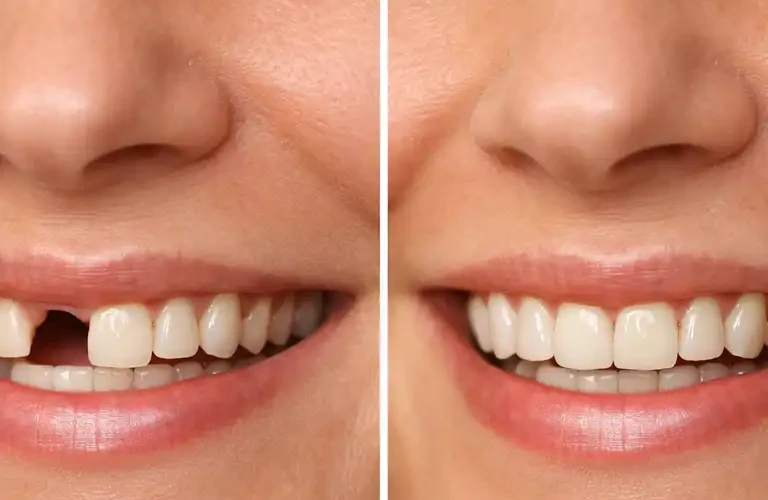
A Dental Bridge is one of the restorative and aesthetic methods in dentistry used to replace one or more missing teeth. In this method, an artificial tooth forms a bridge with the help of the adjacent teeth or implants to fill the empty space and preserve the natural appearance and function of the mouth. As mentioned, the word Bridge literally means “a bridge.” If we look at this more precisely and professionally, a bridge is actually a fixed dental prosthesis. This means that, unlike removable dentures, it cannot be taken out by the patient and is bonded to the adjacent teeth or implants.
As its name suggests, this device fills the gap between healthy teeth like a “bridge.”
In this method, the adjacent teeth (called Abutment teeth) are prepared and covered with crowns to support the artificial tooth (Pontic) that is placed in the middle.
Components of a Dental Bridge
Each bridge consists of two main parts:
1.Abutment: The healthy teeth located on both sides of the edentulous area that act as the pillars of the bridge. These teeth must be prepared so that crowns can be placed on them.
2.Pontic: The artificial tooth or teeth in the middle that fill the empty space and rest on the gum but are not attached to it.
Materials and Types of Bridges
The choice of bridge material depends on the location of the tooth (front or back) and your budget:
All-metal: Usually made from gold alloys or other precious metals. It is very strong, but because of its metallic color, it is mainly used for molars (back teeth).
Porcelain fused to metal (PFM): It has a metal internal framework and an outer porcelain (ceramic) layer. It provides both high strength and a tooth-colored appearance.
All-ceramic (Zirconia / E‑max): The most aesthetic type of bridge, with a remarkable resemblance to natural teeth. It is the best option for front teeth and does not cause sensitivity.
When “should” a bridge be used?
When one or more consecutive teeth are lost, if the empty space is not filled, the following problems occur, which a bridge helps prevent:
Tooth movement: Adjacent teeth tilt toward the empty space.
Overeruption: The tooth in the opposite jaw grows toward the empty space (because there is no opposing tooth).
Temporomandibular joint disorder (TMJ): Due to changes in how the teeth come together, the person may experience jaw pain and headaches.
Who Are the Ideal Candidates for a Dental Bridge?
1. People with one or more consecutive missing teeth
The primary candidate is someone who has lost one, two, or at most three teeth consecutively in the same area.
Note: If the number of missing teeth is high (for example, 4 consecutive teeth), the bridge may break under chewing pressure due to the long span of the bridge. In such cases, implants are a better option.
2. People whose adjacent teeth need restoration
This is one of the smartest situations for choosing a bridge. If the teeth on both sides of the empty space have:
Extensive decay
Old and large fillings
Irregular shape or discoloration
In this case, by placing a bridge, not only is the missing tooth replaced, but the two damaged teeth are also strengthened and beautified with bridge crowns (killing two birds with one stone).
3. People who do not have sufficient jawbone for implants
Some patients, due to severe bone loss or underlying medical conditions, cannot undergo implant surgery or do not wish to have bone graft surgery.
Why a bridge? A bridge does not require bone at the site of the missing tooth and is supported by the existing teeth.
4. People who are looking for a fast result
Implant treatment is a process that may take between 3 to 6 months.
Ideal candidate: Someone who wants to regain their smile and chewing ability within about 2 weeks (for example, before an important event or a trip).
5. People with healthy gums and supporting tissues
The main requirement for someone to be a candidate for a bridge is having strong supports:
Healthy gums: There should be no infection or active gum disease.
Strong roots: The adjacent teeth must have long and healthy roots so they can bear the extra load of the additional tooth.
Who Are NOT Suitable Candidates for a Dental Bridge? (Contraindications)
For greater honesty with patients and to increase the credibility of the website, it is essential to mention these cases:
1. People with weak abutment teeth:
If the adjacent teeth are loose, a bridge will cause them to fail more quickly.
2. People with poor oral hygiene:
A bridge requires the use of special dental floss (Super Floss). If the patient does not maintain proper hygiene, the teeth under the bridge will decay quickly.
3. People whose adjacent teeth are completely healthy and untouched:
At Dr. Nazari’s clinic, such patients are usually advised to choose implants instead of grinding down two completely healthy teeth to build a bridge, so that the healthy tooth structure is not lost.
Technical Parameter | Traditional Bridge | Maryland Bridge (Resin‑Bonded) | Cantilever Bridge | Implant‑Supported Bridge |
Connection Method | Full crown on abutment teeth | Metal or ceramic wings behind the tooth | Crown only on one side of the gap | Direct connection to the implant fixture |
Distribution of Chewing Force | Excellent (force is distributed between two abutments) | Low (force is applied to the bonding adhesive) | Sensitive (creates lever force on one tooth) | Direct connection to the implant fixture |
Tooth Preparation | Reduction of about 1–2 mm from all tooth surfaces | Very slight roughening of the back of the tooth (enamel) | Full preparation of the abutment tooth on one side | No preparation of adjacent teeth required |
Common Materials | Zirconia, PFM, or E‑max ceramic | Reinforced ceramic or bio‑metals | All‑ceramic or zirconia | Titanium (base) + zirconia (crown) |
Risk of Secondary Caries | Moderate (requires precision at crown margins) | Very low (tooth structure remains intact) | Moderate (pressure may cause cement gaps) | Zero (implants do not develop caries) |
Jaw Bone Resorption | Bone resorption occurs at the missing tooth site | Bone resorption occurs at the missing tooth site | Bone resorption occurs at the missing tooth site | Prevents bone resorption |
Additional and more detailed explanations of each model
1.Traditional Bridge; the gold standard of strength
In this method, the abutment teeth act like the pillars of a bridge.
Technical precision: In Dr. Nazari’s clinic, these bridges are designed using CAD/CAM technology so that the crown margins fit on the tooth with micron-level precision and prevent the penetration of saliva and bacteria.
Suitable for: Areas where chewing pressure is very high (molar teeth).
2.Maryland Bridge; delicacy and preservation
This bridge is for people who are afraid of having their healthy teeth shaved.
Technical precision: The success of this method depends 100% on the quality of bonding (adhesion). The use of new-generation resin adhesives ensures that the wings do not easily detach.
Limitation: It is recommended only for front teeth where mechanical pressure is low.
3.Cantilever Bridge; a solution for special conditions
This type of bridge has a high engineering risk because it acts like a “diving board.”
Technical precision: It is used only when the abutment tooth is very strong and the missing space is small.
Warning: If not designed properly, it can cause the root of the abutment tooth to fracture.
4.Implant‑Supported Bridge; modern engineering
The best solution when 3 or 4 consecutive teeth are missing.
Technical precision: Instead of placing 4 implants for 4 teeth, 2 implants are placed on both sides and a 3‑ or 4‑unit bridge is mounted on them. This reduces costs and distributes pressure evenly.
Which material is better for your bridge?
Zirconia: For those who want both exceptional strength and beauty. The best option for long bridges.
E‑max: For front teeth where translucency and light transmission similar to natural teeth are the top priority.
PFM (Porcelain‑Fused‑to‑Metal): An economical and durable option, but over time it may create a dark line at the gum margin
We are here to help you make the best decision. To receive a free professional consultation and book an appointment with Dr. Hesam Nazari, please use the following methods:
Contact the Clinic (Landline): ☎️ +987153341322
Mobile & Urgent Consultation: 📱 +989031408680
Online Request: Fill out the form below, and our experts will contact you as soon as possible. 📩
Our commitment is to provide safe and painless services for your healthy smile. 🌿

Table of Contents
“All dental services, from general to cosmetic and specialized, are provided at this clinic. Below you can see some of the services.”
Teeth bleaching
(Teeth whitening)
Overdenture
(Implant-supported prosthesis)
Dentures
(Replacement tooth)
Dental restoration
(Dental reconstruction)
Pediatric dentistry
(Pediatric dentistry)
Cosmetic dentistry
(Cosmetic dentistry)
General dentistry
(General dentistry)
Dental scaling
(Dental cleaning)
These are some of our main services.
To view the full list of services and details of each treatment, visit the Services page

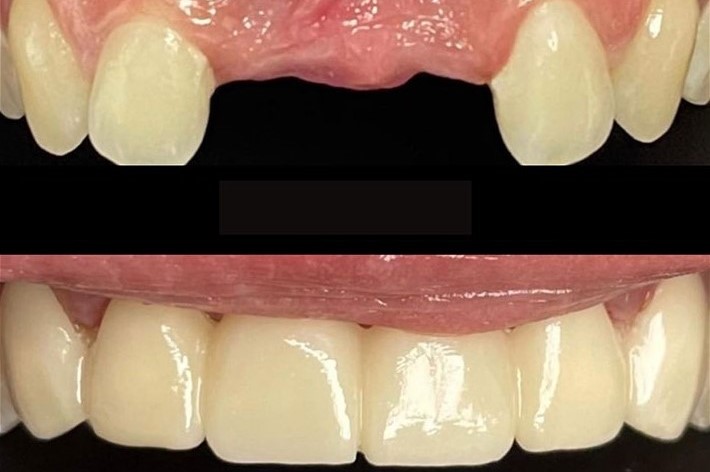
Specialized review of different types of dental bridges
1.Traditional Bridge (Traditional Bridge); the gold standard
This method is still the most popular solution for replacing a missing tooth.
Additional explanation: In this method, the pontic (artificial tooth) is held in place by two crowns that are placed on the abutment teeth.
Who is it suitable for? People whose adjacent teeth already have old fillings, decay, or deformities. With this method, those teeth are also restored and become more aesthetic.
Professional note: If the distance between the two abutment teeth is large, the pressure on the bridge increases and its lifespan may be reduced.
2.Maryland Bridge (Maryland Bridge); a conservative method
Additional explanation: Instead of fully crowning the adjacent teeth, only two small wings are bonded to the back of the neighboring teeth.
Special advantage: Your healthy teeth remain almost untouched (only minimal preparation within the enamel).
Limitation: Due to lower bonding strength compared to full crowns, this method is recommended only for front teeth that experience less chewing pressure. It is also not suitable at all for people who grind their teeth.
3.Cantilever Bridge (Cantilever Bridge); a special solution
This bridge is supported only from one side.
Additional explanation: It is similar to a diving board at a swimming pool; one side is firmly fixed and the other side is suspended.
Application at Dr. Nazari’s clinic: Today this method is used less frequently due to its higher risk (possibility of leverage and fracture of the abutment tooth), except in special situations such as when there is no tooth on one side or for lateral teeth (the second tooth from the front) where the pressure is very minimal.
Risk: Unusual pressure on the root of the abutment tooth which may lead to its loosening.
4.Implant‑Supported Bridge (Implant‑Supported); the most modern choice
Instead of relying on vulnerable teeth, it relies on the jawbone.
Additional explanation: When 3 or 4 consecutive teeth are missing, instead of placing 4 implants, the dentist places 2 implants on both sides and mounts a bridge on them.
Why is this method excellent?
1.Your natural teeth remain completely untouched.
2.Implants prevent jawbone loss (something that conventional bridges cannot do.
3.It creates a feeling very similar to natural teeth while chewing.
Final recommendation of Dr. Hesam Nazari:
“The choice of bridge type is not a one‑size‑fits‑all solution. The health of the gums, bone density, and the number of missing teeth are the main determining factors. Our goal in the clinic is to choose the option that provides the longest durability with the least damage to your healthy tissues.”
In‑depth review of the advantages of dental bridges
1.Immediate return of confidence and speech
Unlike implants, which may keep the patient for months in a state of “toothlessness” or using a loose temporary prosthesis, a bridge quickly fills the empty space. Losing front teeth causes a whistling sound when pronouncing the letters “S” and “Z”; due to its integrated structure, a bridge immediately corrects the patient’s phonetics (speech).
2.Biomechanical stability (prevention of chain movement)
Teeth lean on each other like domino pieces. When one is lost, the adjacent teeth tilt toward the empty space and the opposing teeth begin to over‑erupt (come out of the bone). A bridge acts as a “Space Maintainer,” locking the entire jaw system and preventing these catastrophic structural changes.
3.An excellent option for patients with medical limitations
Many people, due to underlying conditions such as uncontrolled diabetes, severe osteoporosis, or the use of medications that interfere with bone healing, cannot undergo implant treatment. Because a bridge does not enter the living bone tissue, it is a safe method without surgical risk for these patients.
In‑depth review of technical disadvantages and warnings
1. The “tooth reduction” paradox: the biggest price of aesthetics
For a bridge to remain strong, the abutment teeth must be shaped like cylinders.
Technical note: This preparation removes tooth enamel (the hardest tissue in the human body). If the abutment teeth are healthy, this may expose them to the risk of sensitivity or the need for root canal treatment in the future. At Dr. Nazari’s clinic, to minimize this drawback, microscopic tooth preparations are used to preserve as much natural tooth structure as possible.
2. The challenge of hidden decay (Recurrent Caries)
One of the most serious disadvantages of a bridge is that if the cement under the crown gradually dissolves over time, bacteria can enter the space beneath the bridge. Because the tooth is covered by a crown, the patient may not see the decay or feel pain until the tooth is severely damaged and the bridge becomes loose.
Solution: Periodic dental examinations with X‑rays are the only reliable way to detect and prevent this problem early.
3. Changes in gum anatomy (the “black shadow” phenomenon)
Since a bridge does not have a root, the jawbone in that area is not stimulated and gradually undergoes resorption (atrophy). As a result, the gum may recede and create a small gap between the gum and the artificial tooth. This gap can look unaesthetic and can also trap food, leading to bad breath.
4. Lifespan and replacement cost
No dental bridge is permanent. The average lifespan of a high‑quality bridge is about 10–15 years. The drawback is that when the bridge reaches the end of its life, you may not only have lost the original missing tooth, but the abutment teeth might also require retreatment due to damage. This can significantly increase long‑term costs.
Specialized summary for final decision
Choose a bridge if:
Your adjacent teeth have already had root canal treatment
They contain large fillings or restorationsTheir shape or appearance needs correction
In these cases, a bridge can serve as an excellent restorative‑esthetic treatment.
Do not choose a bridge if:
Your neighboring teeth are completely healthy, white, and structurally intact
In this situation, a dental implant—despite its higher initial cost—is usually a healthier and more economical long‑term solution.


💬 Free Initial Consultation & Examination 🩺
✨ For a free specialized consultation and to book an appointment with Dr. Hesam Nazari, please contact us through the following methods:
📱 Mobile Consultation: +989031408680
☎️ Clinic Phone: +987153341322
📍 Address: Iran, Fars, Fasa, Shahzadeh Ghasem Square, opposite Asieh High School, Dr. Hesam Nazari Clinic
🕐 Working Hours: Saturday to Wednesday (8:00 AM – 22:00)
Thursday, Friday & Public Holidays: Closed
📩 Please fill out the form below for online booking, and we will contact you as soon as possible.

Why Dr. Hesam Nazari’s Clinic?
Precision in execution, expertise in results — a different dental bridge experience with Dr. Hesam Nazari
When it comes to replacing missing teeth, choosing the right dentist is just as important as the materials used. At Dr. Hesam Nazari’s clinic, this process goes far beyond a simple treatment.
1. Microscopic precision in tooth preparation (protecting the abutment teeth)
One of the biggest concerns with dental bridges is potential damage to the adjacent teeth. At Dr. Nazari’s clinic, tooth preparation is performed with minimal invasion and high precision to maximize the longevity of the supporting teeth and reduce the risk of future sensitivity.
2. Premium materials (long‑lasting durability)
We use top‑quality zirconia blocks and E‑max ceramics, which not only offer exceptional strength against chewing pressure but also provide a translucency that closely mimics natural teeth.
3. Digital smile design
Before the final bridge is created, its shape and shade are digitally designed based on your facial anatomy and the color of your neighboring teeth. The goal is a perfectly natural appearance—so natural that no one can tell the tooth is artificial.
4. Hygiene and a calming environment
A stress‑free treatment experience in a fully sterile environment is our priority. We believe every patient should feel comfortable and confident throughout the entire treatment process.
5. Post‑treatment follow‑up and care
Our clinical team carefully monitors the healing process and the patient’s adaptation to the bridge. We also provide complete guidance on oral care and maintenance to ensure the long‑term success of the treatment.
Conclusion: Dental Bridges — Bringing Back the Brilliance of Your Smile
Losing a tooth is not only an aesthetic concern; it can also lead to difficulties in chewing, changes in facial structure, and a decrease in self‑confidence. As discussed in this article, a dental bridge is one of the fastest, most reliable, and most aesthetically pleasing solutions for restoring full function to your mouth.
At Dr. Hesam Nazari’s clinic, we believe that successful treatment depends on two essential factors: accurate diagnosis and precise execution. A dental bridge becomes an excellent treatment option when the supporting teeth are strong enough and the bridge is designed with micrometric precision to prevent future decay.
Your smile is your identity.Don’t let the absence of a single tooth diminish this beautiful image.
All dental services — from A to Z — are provided in this clinic. Below, you can see a selection of the main treatments.
Impacted Wisdom Tooth Surgery
(Impacted Wisdom Tooth Surgery)
Wisdom Tooth Surgery
(Wisdom Tooth Surgery)
Oral and Maxillofacial Surgery
(Oral and Maxillofacial Surgery)
Root Canal Treatment (Endodontics)
(Root Canal Treatment)
Gum Lift
(Gum Contouring)
Tooth Extraction
(Tooth Extraction)
Fixed Prosthesis
(Permanent Prosthesis)
Removable Prosthesis
(Removable Prosthesis)
You can see a selection of our clinic services here; for the full list, please visit the Services page.

“Let’s go to Instagram!”
“Join Dr. Hesam Nazari’s family on Instagram and follow us.”