What is an Overdenture?
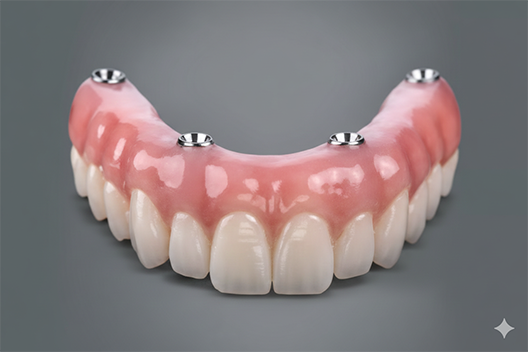
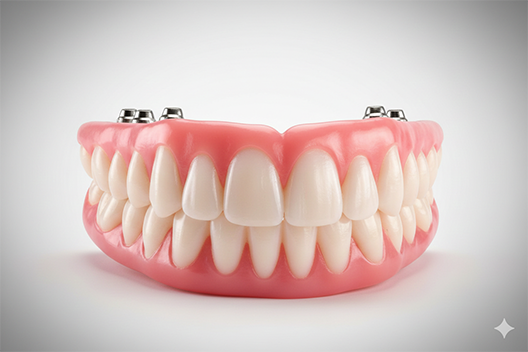
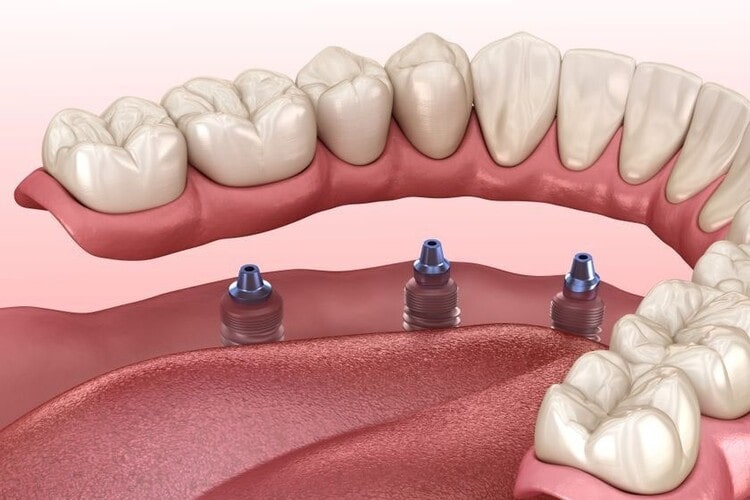
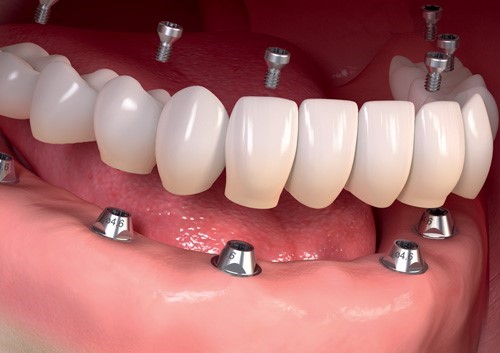
An overdenture is a type of removable dental prosthesis that, instead of resting directly on the gums, is supported by implant posts or, in some cases, by the remaining roots of natural teeth. This method is a very ideal option for people who have lost all the teeth in one or both jaws. An overdenture is actually a smart combination of a traditional denture and dental implants. If you are tired of your dentures moving or, due to gum resorption, using dentures has become difficult for you, an overdenture is the best choice. In this method, your dental prosthesis is locked onto several implant posts in the jaw so that it remains stable.
Overdenture – a dental prosthesis with natural support
An overdenture, or a dental prosthesis with natural support, is a removable prosthesis designed to replace missing teeth. The main difference between an overdenture and a traditional removable denture is that, in addition to resting on the gums, it is also supported by the remaining teeth or dental implants. This additional support provides greater stability of the prosthesis, more comfort for the patient, and helps prevent jawbone resorption.
Types of Implant‑Supported Overdentures
Overdentures are divided into three main categories based on the mechanism used to attach the prosthesis to the implants. The choice of method depends on the patient’s budget, the condition of the jawbone, and the desired level of denture stability.
1.Ball‑Retained Overdenture
This method is one of the most common and economical types of overdenture.
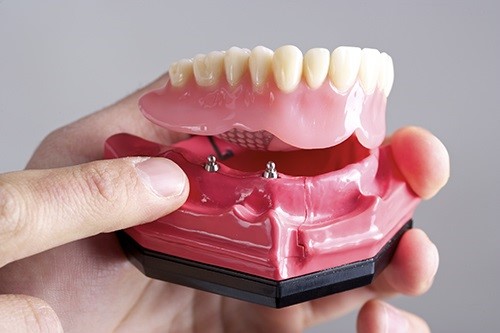
Mechanism: a small ball‑shaped metal attachment (male attachment) is placed on each implant. Inside the denture, sockets with plastic rings (O‑rings) are designed to snap onto these balls.
Advantages: it is very easy to clean and costs less compared to other systems.
Suitable for: patients who want a significant improvement in denture stability with an optimal budget.
2.Bar‑Retained Overdenture
In this method, the implants are connected to each other with a thin metal bar that is custom‑made according to the exact curve of the patient’s jaw.
Mechanism: the denture is attached to the metal bar using special clips and locks firmly in place.
Advantages: chewing pressure is distributed evenly among the implants, and stability is significantly higher than the ball system. The likelihood of denture looseness over time is also lower.
Suitable for: patients whose jawbone requires additional support.
3.Locator‑Retained Overdenture
Locator attachments are a newer generation of connectors that have become very popular because of their low profile and high durability.
Mechanism: these attachments function like press‑button connectors. Instead of a single point of retention (like the ball system), they provide multiple contact surfaces, allowing the denture to “click” securely into place.
Advantages: because of their low height, they are ideal for patients with limited vertical space in the mouth. The replacement of the consumable parts (retention inserts) is also very quick and easy.
Suitable for: patients who want the most modern and comfortable attachment system.
4.Tooth‑Supported Overdenture
This method is used when the patient still has several healthy teeth (usually 2 to 4 teeth) in the jaw. Instead of extracting these teeth and replacing them with implants, the dentist uses the roots of the patient’s natural teeth as supports for the prosthesis.
How the system works:
Root preparation: the supporting teeth first undergo root canal treatment.
Crown reduction: the upper part of the tooth (crown) is shortened close to the gum level to create enough space for the prosthesis.
Placement of connector components (Post & Coping): special metal components are placed inside the root, and their upper part has a projection (similar to a button or metal ball) that extends above the gum.
Prosthesis attachment: the denture, which has specially designed sockets underneath, locks onto these projections
Advantages of Overdentures (Why is this method recommended?)
1.Excellent stability and retention: unlike traditional dentures that stay in the mouth using saliva or adhesives, overdentures are locked onto support attachments. This means that while talking, laughing, or sneezing, the denture will not move out of place.
2.Prevention of bone loss: implant posts (or tooth roots) act like natural roots and stimulate the jawbone, preventing bone resorption and the aging appearance of the face.
3.Improved chewing ability: chewing power with this method is several times greater than with conventional dentures. Patients can once again enjoy foods such as apples or meat.
4.Preservation of taste sensation and tongue comfort: in the upper jaw, the borders of the prosthesis and the palatal coverage are made much smaller. This allows patients to better feel the taste and temperature of food and provides more space for tongue movement.
5.Repair and adjustment capability: if the patient’s gum shape changes over time, the overdenture can easily be relined, and the cost of repair is significantly lower than that of fixed prostheses.
Disadvantages and Challenges of Overdentures (Things You Should Know)
1.Mobility (psychological aspect): although an overdenture is stable in the mouth, it is still considered a “removable” prosthesis, which means the patient must remove it from the mouth at night. For some patients, this can be psychologically unpleasant.
2.Periodic maintenance cost: the retention components (nylon washers) are consumable parts. These washers wear out due to repeated insertion and removal and usually need to be replaced by the dentist about once a year.
3.Prosthesis volume: although it is more delicate than a conventional denture, it still has a larger volume compared to “fully ceramic fixed implants,” and it may take some time for the patient to get used to it.
4.Wear of metal components: in the long term (after several years), the metal heads of the implants (abutments) may become worn and may require specialized replacement.
5.Need for strict hygiene: due to the small space between the prosthesis and the gum, if the patient does not maintain proper hygiene, there is a risk of gum inflammation around the implants.
Overdenture is suitable for you if:
1.You are tired of your traditional denture slipping or making “clicking” sounds, and you want to be able to speak and laugh confidently in public.
2.You would like to restore your chewing ability and be able to eat fruit and firmer foods again.
3.You are looking for a solution that, in addition to improving appearance, helps prevent jawbone loss and premature aging of your facial structure.
4.Your budget is limited for fully fixed implants (which require many posts) and you are seeking a high‑quality yet more affordable option.
5.Oral hygiene is important to you, and you prefer to have teeth that you can remove and easily disinfect, including both gum and denture.
However, it may not be your first choice if:
6.Psychologically, you have an issue with the idea of “removable teeth” and you definitely want teeth that are fixed to your jaw like natural teeth and never need to be removed (in this case, you should consider fixed implants).
7.You are not willing to have annual checkups for replacing small consumable components (washers)
Final words at Dr. Hessam Nazari’s clinic:
Many of our patients describe overdentures as a “lifesaver” after receiving them, because they eliminate the instability of traditional dentures and restore their confidence. If you still have a few healthy teeth, our priority in the clinic is to preserve them and use them to support a tooth‑supported overdenture, allowing you to experience the most natural possible feeling.
Comparison Parameter | Ball Overdenture | Bar Overdenture | Locator Overdenture | Overdenture on Natural Teeth |
Type of Support | Titanium implant | Titanium implant | Titanium implant | Patient’s natural tooth root |
Geometric Shape of Connection | Metal ball on the abutment | Integrated metal bar | Low‑profile flat cylinder | Metal caps on the root |
Number of Supports (Lower Jaw) | 2 to 4 units | 3 to 4 units | 2 to 4 units | At least 2 healthy roots |
Number of Supports (Upper Jaw) | At least 4 units | 4 to 6 units | At least 4 units | At least 4 healthy roots |
Mechanical Stability Level | Moderate | Maximum and rigid | High | Moderate to high |
Distribution of Chewing Load | Concentrated on the supports | Uniform across the entire jaw | Balanced and coordinated | Directly on the root and ligament |
Chewing Ability | Moderate | Very high | High | Good with natural sensation |
Oral Space Occupation | Moderate | Relatively high | Very small and delicate | Moderate |
Ease of Cleaning | Very easy | Difficult (requires attention under the bar) | Easy and quick | Requires intensive root care |
Need for Vertical Space | High | Moderate to high | Very low | Moderate |
Final Treatment Cost | Economical | High (laboratory cost) | Moderate to high | Cheapest (without implant) |
Jaw Bone Condition | Preservation of bone around the supports | Excellent preservation of the entire jaw bone | Appropriate bone preservation | Excellent (best bone preservation) |
Summary and Selection Guide Based on the Patient’s Condition
Ball Attachment Overdenture:This is considered the first and most economical choice for patients who want to eliminate denture looseness (especially in the lower jaw) with minimal cost and who do not have severe limitations in oral space.
Bar‑Retained Overdenture:For patients with severe bone resorption or those who want to maximize their chewing power, this option is often the best treatment choice. Despite being more difficult to clean, the integrated metal bar structure provides excellent strength and stability.
Locator Overdenture:This is the most suitable option for patients seeking maximum comfort, a more delicate denture design, and easier maintenance. Due to its very low profile, this system is the only standard and professional solution for individuals with limited inter‑arch space.
Tooth‑Supported Overdenture:The ideal option for patients who still have several healthy and strong tooth roots. By preserving the roots, this method helps prevent jaw bone resorption. Because the natural nerve receptors are maintained, it provides a much more realistic chewing sensation and greater psychological comfort compared with all implant‑based methods.
We are here to help you make the best decision. To receive a free professional consultation and book an appointment with Dr. Hesam Nazari, please use the following methods:
Contact the Clinic (Landline): ☎️ +987153341322
Mobile & Urgent Consultation: 📱 +989031408680
Online Request: Fill out the form below, and our experts will contact you as soon as possible. 📩
Our commitment is to provide safe and painless services for your healthy smile. 🌿

Table of Contents
“All dental services, from general to cosmetic and specialized, are provided at this clinic. Below you can see some of the services.”
Aligner
(Invisible orthodontics)
Dental implant
(Dental implantation)
Dental laminate
(Cosmetic crown)
Composite veneer
(Composite crown)
Pediatric dentistry
(Pediatric dentistry)
Cosmetic dentistry
(Cosmetic dentistry)
General dentistry
(General dentistry)
Dental scaling
(Dental cleaning)
These are some of our main services.
To view the full list of services and details of each treatment, visit the Services page
Post‑Treatment Care for Overdentures (Guide to Maintaining Health and Durability)
Overdenture treatment includes two parts: a fixed component (implants or tooth roots) and a removable component (the dental prosthesis). Proper care of both parts is essential to prevent infection and bone loss.
1.Daily Hygiene of the Removable Part (The Denture)
Rinsing After Meals: After every meal, remove the prosthesis from the mouth and rinse it with warm water (not hot) so that food particles do not remain underneath it.
Special Brushing: At night before sleep, clean the prosthesis using a soft brush and a mild cleaning liquid (such as liquid soap or diluted dishwashing liquid).
Important Note: Do not use regular toothpaste to clean the prosthesis, because the abrasive particles in toothpaste create microscopic scratches on the denture surface and increase bacterial accumulation.
Gum Rest: Remove the prosthesis from the mouth for at least 6–8 hours each day (preferably during sleep) so that the gum tissue can rest and avoid fungal infection or inflammation.
2.Hygiene of the Fixed Part (Inside the Mouth)
Cleaning the Abutments: The bases that protrude from the gum (locator, metal ball, or bar) must be cleaned using a very soft toothbrush and toothpaste. Plaque accumulation around these bases can cause gum inflammation and eventually implant failure.
Gum Massage: Massage the gums beneath the prosthesis using a soft brush or a clean finger to improve blood circulation in the gum tissue.
3.Night Storage
After cleaning, place the prosthesis in a container of clean water or a special denture disinfecting solution. Leaving the prosthesis dry for long periods can cause deformation (warping).
4.Periodic Checkups and Component Maintenance (Very Important)
Replacement of Caps (Washers): The rubber or nylon components inside the prosthesis that allow the denture to attach firmly to the bases gradually wear out with repeated insertion and removal. According to Dr. Nazari’s recommendation, these caps should be replaced every 6–12 months so that the stability of the denture remains as strong as on the first day.
Gum Resorption Check: Over time, the gums may slightly settle. During periodic visits, the doctor examines the empty space under the prosthesis and, if necessary, adjusts it using the relining method so it fits the gums again.
5.Dietary and Behavioral Precautions
Avoid Sudden Pressure: Do not bite very hard foods (such as hard crusts or ice) with the front teeth. Chewing pressure should be applied vertically and distributed across the molar teeth.
Correct Placement: Never try to lock the denture in place by biting down. Always position the denture on the attachments with your hand first, then gently press with your fingers until you hear the “click” sound.
Precise Stages of Overdenture Treatment
1.Initial Evaluation and Treatment Planning (Diagnostics)
At this stage, the patient’s general health condition and the quality of the jawbone are evaluated.
Specialized Imaging: A CBCT scan (dental CT scan) is required to accurately measure the height and thickness of the jawbone.
Diagnostic Impressions: An initial impression of the jaws is taken to evaluate the available space for placing the teeth and overdenture components.
System Selection: Based on the patient’s budget and jaw condition, one of the four systems (Ball, Bar, Locator, or Tooth‑Supported) is selected.
2.Surgical Placement Phase (Surgical Phase)
This stage involves placing titanium implants inside the jawbone.
Implant Placement: Under local anesthesia, the implants are inserted into strategic positions within the jaw.
Suturing: The gum tissue is sutured over the implants to allow the healing process to begin.
Temporary Prosthesis: If necessary, the patient’s current denture is adjusted so it can be used temporarily during the healing period, ensuring the patient is not left without teeth.
3.Healing and Osseointegration Phase
This is the most sensitive period for the success of the treatment.
Waiting Period: Usually between 3 to 5 months are required for the jawbone to fully integrate with the titanium surface of the implants.
Care: The patient must avoid excessive pressure on the surgical area and maintain strict oral hygiene.
4.Uncovering and Abutment Placement
After confirming proper integration of the implants, a minor surgical procedure is performed.
Gum Opening: The tops of the implants are exposed from beneath the gum tissue.
Placement of Healing Abutments: Small metal components are attached to the implants so that the gum tissue heals in a circular and well‑formed shape around them (this process takes about two weeks).
5.Final Impression Phase (Prosthetic Phase)
At this stage, the removable prosthetic teeth are fabricated.
Position Transfer: Using special components, the exact position of the implants is transferred to the dental laboratory.
Selection of Color and Shape: The color and shape of the teeth are selected according to the patient’s age, gender, and facial structure.
Wax Try‑In: A wax version of the teeth is produced and tested in the patient’s mouth to confirm appearance and bite alignment.
6.Final Delivery and Adjustment
Attachment Installation: The final attachment components (such as locator attachments or a bar) are secured onto the implants in the mouth.
Prosthesis Locking: The denture is placed onto the attachments and locks firmly into position with a “click” sound.
Occlusion Adjustment: The dentist ensures that no excessive pressure is applied to any implant during chewing.
7.Post‑Delivery Care and Maintenance
Hygiene Training: The patient is instructed on how to remove and insert the denture properly and how to clean the implant attachments.
Regular Checkups: The patient should visit the clinic every six months to evaluate gum health and replace retention caps if necessary.
Important Note: If the overdenture is supported by natural teeth, the surgical stage is eliminated. Instead, the supporting teeth undergo root canal treatment, are shortened, and are prepared with special caps to receive the prosthesis

💬 Free Initial Consultation & Examination 🩺
✨ For a free specialized consultation and to book an appointment with Dr. Hesam Nazari, please contact us through the following methods:
📱 Mobile Consultation: +989031408680
☎️ Clinic Phone: +987153341322
📍 Address: Iran, Fars, Fasa, Shahzadeh Ghasem Square, opposite Asieh High School, Dr. Hesam Nazari Clinic
🕐 Working Hours: Saturday to Wednesday (8:00 AM – 22:00)
Thursday, Friday & Public Holidays: Closed
📩 Please fill out the form below for online booking, and we will contact you as soon as possible.

Why Choosing Dr. Hesam Nazari’s Clinic for an Overdenture Is a Smart Decision
Choosing a surgeon for overdenture treatment is not simply choosing a doctor—it is choosing the quality of your future life. At Dr. Hesam Nazari’s clinic, we do not just make “dentures”; we restore your “smile and chewing ability.” The reasons our services stand out include:
1.Use of Credible Academic Knowledge (Russia)
Relying on specialized education in Russia, Dr. Hesam Nazari applies the latest Eastern European protocols and the Slavic approach in jaw surgery. This background enables him to offer the best treatment plan even in complex cases with severe bone resorption.
2.Microscopic Precision Through Digital Analysis
We avoid guesswork in surgery. Using optical scanners and 3D CBCT imaging, the position of each implant fixture is determined with sub‑millimeter accuracy. This precision ensures that:
Chewing forces are distributed in an engineered manner.
Implant longevity is maximized.
The risk of jaw nerve injury is reduced to zero.
3.Use of Top‑Tier Global Materials and Brands
In our clinic, original intermediary components (abutments and locator attachments) are used. The quality of these auxiliary parts is the line between a “slipping” overdenture and one that is “stable and secure.” We choose brands with the highest compatibility with the bone physiology of Iranian patients.
4.Collaboration with Dedicated Laboratories and a Wax Try‑In Session
One of our greatest strengths is smile design. Unlike traditional methods, you can try a wax version in your mouth before the final teeth are made. In this session, you and Dr. Nazari can give input on:
Tooth length (taller or shorter)
Tooth color and shape matched to your face
Speech and pronunciation
so the final result is exactly what you envisioned.
5.Painless Surgery and Recovery Management
With modern anesthesia techniques and minimally invasive surgical methods, your surgical experience can be comfortable. We are also committed to ensuring you are never “without teeth” at any stage of treatment—by modifying your old denture or providing a temporary prosthesis, your confidence is maintained throughout the healing period.
6.Commitment to Ongoing Support and Periodic Maintenance
Treatment at Dr. Nazari’s clinic does not end with delivery of the prosthesis. We stay with you through regular checkups, timely replacement of consumable parts (retention caps), and hygiene education to protect your investment in your health
Conclusion:An overdenture is not just a dental treatment;
it is the end of years of limitations in eating, speaking, and feeling embarrassed because of loose dentures.
Choosing this treatment at Dr. Hesam Nazari’s clinic means benefiting from a combination of cutting‑edge global technology and international surgical experience.
We understand that deciding to undergo implant surgery can be challenging, but our mission is to provide a treatment that not only restores your natural facial aesthetics but also preserves the health of your jawbone for many years to come.
Remember — the quality of your life is worth an informed and precise choice.
Are you ready to smile with confidence again?
You can contact us now to schedule a specialized consultation and digital analysis so we can design the best treatment plan tailored to your individual needs.
Final Result:The combination of international experience, digital technology, and precision in prosthetic details has made Dr. Hesam Nazari’s clinic a trusted center for those seeking the highest standard in overdenture treatment.
All dental services — from A to Z — are provided in this clinic. Below, you can see a selection of the main treatments.
Dental Bonding
(Dental Bonding)
Dental Bridge
(Dental Bridge)
Dental Onlay
(Dental Coating)
Dental Crown
(Protective Coating)
Impacted Wisdom Tooth Surgery
(Impacted Wisdom Tooth Surgery)
Wisdom Tooth Surgery
(Wisdom Tooth Surgery)
Oral and Maxillofacial Surgery
(Oral and Maxillofacial Surgery)
Root Canal Treatment (Endodontics)
(Root Canal Treatment)
You can see a selection of our clinic services here; for the full list, please visit the Services page.

“Let’s go to Instagram!”
“Join Dr. Hesam Nazari’s family on Instagram and follow us.”